
Tracking your benzoyl peroxide journey
How long benzoyl peroxide takes to work for acne, what's worth tracking while you use it, and how to tell if a breakout is the treatment or something else.
The short answer
Benzoyl peroxide is one of the most common acne treatments. It reduces acne-causing bacteria on your skin and is used for mild to moderate acne. You can buy it without a prescription in the US and the UK, usually as a gel, cream, lotion or wash, and a pharmacist can help you choose one. The American Academy of Dermatology notes it tends to work best combined with another acne treatment, which a doctor can advise on.
MedlinePlus says it may take 4 to 6 weeks to see the effects, and to contact your doctor if your acne hasn’t improved by then.
A typical timeline
It varies from person to person, but for many people:
- First weeks: dryness, peeling, warmth, tingling or slight stinging are possible side effects. Tell your doctor if they’re severe or don’t go away.
- Weeks 4 to 6: the point where you’d expect to see some effect.
- Beyond 6 weeks: if things haven’t improved, MedlinePlus suggests talking to your doctor. The American Academy of Dermatology says acne treatments in general take at least 6 to 8 weeks before you see fewer breakouts.
Burning, blistering, redness or swelling where you apply it is a reason to call your doctor. It can also cause a serious allergic reaction in some people: MedlinePlus says to stop using it and get emergency help for hives, throat tightness, trouble breathing, feeling faint, or swelling of the face, eyes, lips or tongue.
One practical thing: benzoyl peroxide can bleach hair and coloured fabrics, including pillowcases and towels.
What’s worth tracking
- Progress photos at the same time and in the same light every day.
- Pimple count and how your skin feels: dry, tight, peeling or calm.
- Side effects you notice, like dryness and irritation, and whether they ease.
- When you started, the product you’re using, and any switch to something else.
- Your routine around it: moisturiser, sunscreen, cleanser, and anything you’ve added at the same time. Change one thing at a time if you can, or you won’t know which one did it.
A few things make daily photos comparable: the same spot and the same light (a window in the morning, or the same lamp at night), hair back, no makeup, and roughly the same distance from the camera. Take your first entry before you start using it, so day one really is day one. Skipping a day isn’t a disaster; the timeline still shows the trend.
How to track it in SkinTheory
- Set a hypothesis, like “Benzoyl peroxide reduces my breakouts in 6 weeks”.
- Take three photos a day: front, left and right in each entry.
- Log skin feeling, mood and pimple count with them.
- Add benzoyl peroxide to your skincare routine, so every entry shows what you used.
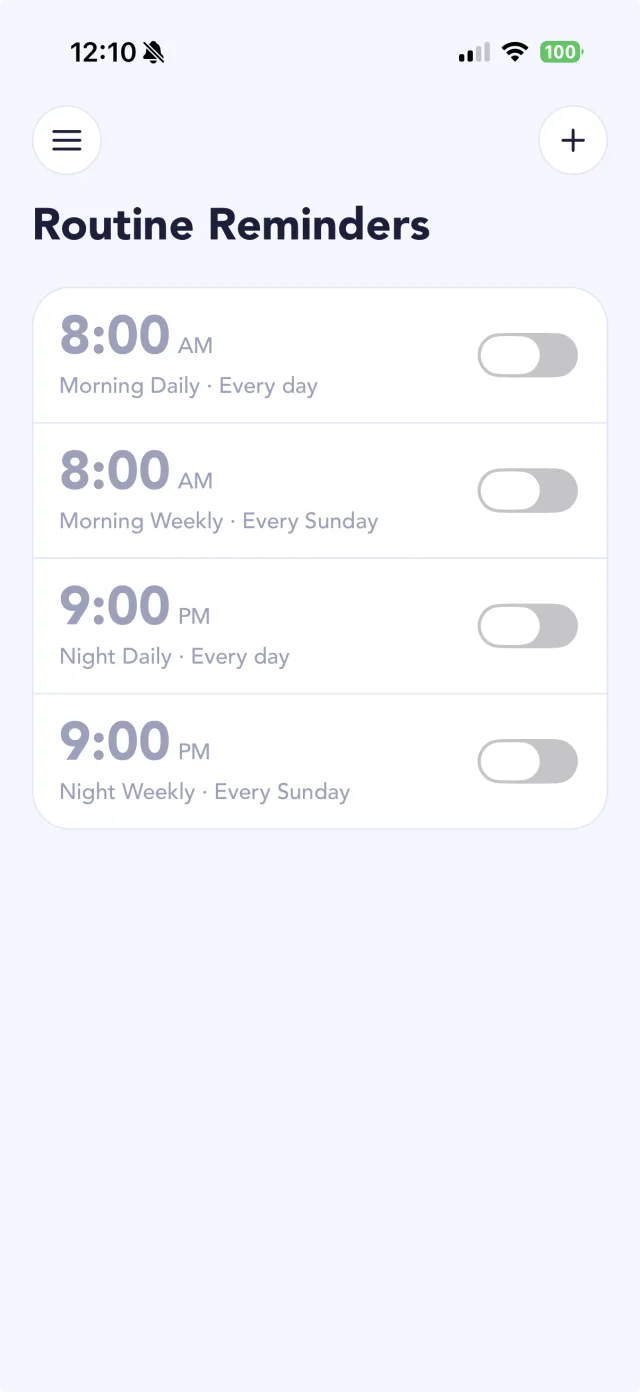
- Set routine reminders for morning and night, daily or weekly, with custom repeats.
- Use the photo timeline as your before and after.
Was it the treatment, or something else?
Benzoyl peroxide is often the first thing people try, so it’s also the first thing people give up on. Before you decide it doesn’t work, check what else was going on.
Log the rest of your life alongside it. SkinTheory’s Lab+ trackers cover Exercise, Dairy, Fast food, Sleep, Alcohol, Water, Protein and Period. Your own data is free forever, and any two Lab+ trackers can be used free at a time. The graphs line your pimple count up against them over the last 21 entries, so you can see whether a flare lines up with the treatment or with your life.
Pillowcases are worth a thought too: you might be swapping to white ones anyway because of the bleaching, and a weekly routine reminder keeps the changes regular.
Read more:
- Dairy and sugar
- Your period
- Alcohol, sleep and stress
- The gym and your bedsheets
- New skincare products
Keep the record
Photos stay private in SkinTheory and never go to your camera roll. Keep your whole history on your phone, so if you move on to another treatment later, you’ve got a clear record of how benzoyl peroxide went.
If you see a doctor or dermatologist, bring the log. It answers “what have you tried, and for how long?” with photos and dates instead of guesses.
A note from Conor
Benzoyl peroxide was one of the treatments I worked through for severe adult acne in my early twenties, along with tretinoin, Differin and Accutane. The acne kept coming back and I didn’t know why. What finally worked for me was getting scientific about it, and a gentler routine: moisturising more, keeping my skin clean without stripping the oils, and removing products rather than adding them.
Questions people ask
How long does benzoyl peroxide take to work?
MedlinePlus says it may take 4 to 6 weeks to see the effects, and to contact your doctor if your acne hasn’t improved by then. Daily photos help you see slow change you’d miss in the mirror.
Does benzoyl peroxide dry out your skin?
It can. MedlinePlus lists dryness, peeling, warmth, tingling and slight stinging as side effects, and says to tell your doctor if they’re severe or don’t go away. Burning, blistering, redness or swelling where you apply it is a reason to call your doctor.
Can benzoyl peroxide bleach pillowcases and towels?
Yes. MedlinePlus warns that benzoyl peroxide may bleach hair and coloured fabrics, so keep it away from them. White pillowcases and towels are a common workaround.
How do I know if benzoyl peroxide is working?
Take photos at the same time and in the same light every day and log your pimple count. In SkinTheory you can set a hypothesis, such as benzoyl peroxide reducing breakouts in 6 weeks, and watch the photo timeline and graphs.
Sources and further reading
- Benzoyl Peroxide Topical: MedlinePlus Drug Information, MedlinePlus (U.S. National Library of Medicine)
- Acne: Diagnosis and treatment, American Academy of Dermatology
- Acne, NHS
This guide is general information written by the SkinTheory team, not medical advice. SkinTheory isn’t a medical device. For diagnosis, prescriptions or side effects, talk to a dermatologist or doctor, and bring your SkinTheory log along.