
Can dirty pillowcases and bedsheets cause acne?
Possibly. Pillowcases collect oil, sweat and product, and one study linked changing them weekly to less acne coming back. Evidence is thin, but it's easy to test.
The short answer
They might play a part, but the evidence is thin. Your face spends hours against your pillowcase every night, and it picks up oil, sweat, hair product and skincare. One study found that changing pillowcases weekly was linked to acne being less likely to come back after treatment. It’s not proven, but it’s one of the cheapest and easiest triggers to test.
What the research says
There isn’t much direct research on bedding and acne. The clearest data point is a 2025 study of 218 people treated for acne. Nearly half had their acne come back, and weekly pillowcase replacement was one of the factors linked to a lower risk of that happening. Factors linked to higher risk included BMI, smoking, drinking, depression and anxiety scores, staying up late, poor eating habits and long screen time. It was a retrospective study, looking back at records, so it shows an association, not cause and effect. People who change their pillowcase weekly may also differ in other habits. We haven’t found any trial that tests pillowcases directly.
The American Academy of Dermatology doesn’t talk about pillowcases specifically, but its advice covers the same ideas. Its tips for managing acne say that touching your face throughout the day can cause acne to flare, and that oil from your hair can cause acne on your forehead. Its list of skin care habits that can worsen acne warns that sleeping in makeup can cause breakouts, even with non-comedogenic products, and that some hair products contain oils that can cause breakouts. A pillowcase that’s been slept on for a week holds a little of all of that, though whether that’s enough to matter hasn’t been studied.
Why it varies from person to person
How much builds up depends on you. Oily hair, heavy hair products, night creams, sleeping in makeup, sweating at night and how you sleep all change what ends up on your pillow and where it meets your face. If it’s playing a part, you might expect side sleepers to notice it on one cheek, and people with a fringe on the forehead.
Phones and hands work in a similar way. A phone held against your cheek, or a habit of resting your chin in your hand, puts oil and pressure on the same patch of skin day after day. The AAD’s point about touching your face applies here too. None of this is well studied, which is exactly why it’s worth testing on yourself.
How to test it on your own skin
SkinTheory doesn’t have a pillowcase tracker, and you don’t need one. A hypothesis with everything else held steady is a clean experiment, and it’s a good example of getting scientific about your skin to isolate a real cause.
- Hypothesis. Set one up in SkinTheory, for example “Does changing my pillowcase every 2 days reduce my cheek breakouts?” and run it for 21 entries.
- Track. Each entry, take your three skin photos and log skin feeling, mood and pimple count. Change your pillowcase every two days for the whole test, and keep everything else the same: same skincare routine, same products, same hair products. If you want a comparison, log a few weeks with your usual schedule first.
- Analyze. After about 21 entries (3 weeks if you log daily), compare your pimple count before and during the test in the graphs, and scroll the photo timeline to see whether the cheek or forehead you sleep on looks different. Dermatologists often suggest 6 to 8 weeks for real changes in acne, so if it’s unclear, keep going.
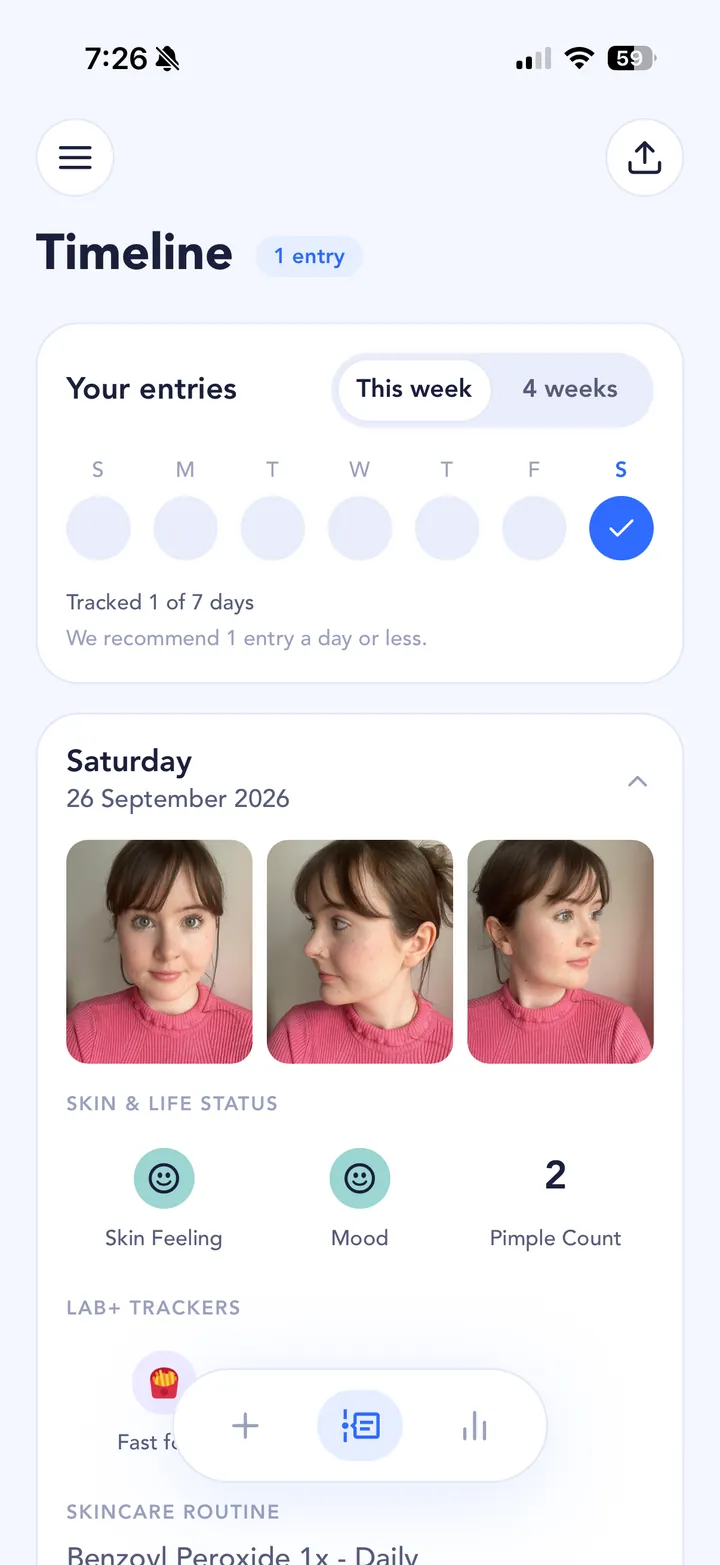
Your photos stay in SkinTheory, never in your camera roll, and your whole history is yours to keep on your phone.
Tips while you test
- Buy a few cheap pillowcases so changing them often is easy, or flip the pillowcase over halfway.
- Take makeup off and let hair products wash out before bed, or tie hair back.
- Wipe your phone regularly and try headphones for long calls if your breakouts are on the side you hold it.
- Wash towels and face cloths often too.
Night-time sweat links this to the gym, and new night creams link it to skincare products. If you’re on a treatment, log pillowcase changes alongside it so you know whether it’s the treatment or your bedding that’s changing your skin.
Questions people ask
How often should I change my pillowcase for acne?
There’s no proven schedule. In one 2025 study, changing pillowcases weekly was linked to a lower chance of acne coming back after treatment, but that doesn’t prove the pillowcase was the cause. If you want to know whether more frequent changes help you, test it for a few weeks while keeping everything else the same.
Are silk pillowcases better for acne?
There isn’t good evidence that silk helps acne. A clean pillowcase of any fabric is the more important part. If you want to try silk, test it like any other change, one thing at a time.
Can my phone cause acne?
There’s little research on phones and acne. A phone does press against your cheek and jaw and picks up oil from your hands and face, and the AAD says touching your face can make acne flare. If you notice spots on the side you hold your phone, try wiping it regularly or using headphones for calls, and track whether that side changes.
Sources and further reading
- Risk Factors of Acne Recurrence After Treatment and Establishment of an Early Warning Model, Journal of Cosmetic Dermatology (2025), via PubMed
- Acne: Tips for managing, American Academy of Dermatology
- 10 skin care habits that can worsen acne, American Academy of Dermatology
This guide is general information written by the SkinTheory team, not medical advice. SkinTheory isn’t a medical device. For diagnosis, prescriptions or side effects, talk to a dermatologist or doctor, and bring your SkinTheory log along.