
Rosacea: what it is, how it differs from acne, and how to track it
Rosacea is a long-term skin condition that causes flushing, redness and acne-like bumps on the central face. It can't be cured, but it can be controlled.
The short answer
Rosacea is a long-term skin condition that mainly affects the middle of the face. It often starts with flushing easily, and over time can turn into redness that doesn’t go away, visible blood vessels and acne-like bumps. DermNet estimates it affects around 5% of adults worldwide, and it usually starts in adulthood.
Nobody knows exactly what causes it. The NHS says it can’t be cured, but treatment can control the symptoms, and it can get worse if it isn’t treated. It tends to come and go in flares.
The one-line difference from acne: rosacea doesn’t cause blackheads, and it usually comes with flushing and lasting redness.
What it looks like, and how it’s different from acne
The American Academy of Dermatology (AAD) lists these signs of rosacea:
- Flushing easily. On darker skin, a warm feeling on the cheeks may be the only early sign.
- Redness that lasts, usually across the nose and cheeks. On brown or black skin it may look violet or brown, or be hard to see.
- Acne-like bumps and pus-filled spots.
- Small visible blood vessels.
- Burning or stinging, sometimes even from water. Dry, rough or tight skin.
- Less often, thickened skin, usually on the nose (rhinophyma). The AAD says men are more likely to get this.
- Eye problems. The AAD estimates that 50% of people with rosacea will have a flare that affects their eyes: grittiness, dryness, redness, light sensitivity or crusts on the eyelashes. This is called ocular rosacea.
Who gets it is less clear-cut than you might read. The NHS says it’s more common in women and people with lighter skin, with worse symptoms in men. DermNet says men and women are affected about equally, and that it may be under-recognised in darker skin.
How it differs from acne, according to the National Rosacea Society:
- Blackheads are often present in acne, but not in rosacea.
- Where: acne often shows up on the chest and back. Rosacea is mainly on the central face.
- Redness is rosacea’s most common feature, along with visible blood vessels and eye symptoms, which acne usually doesn’t have.
- Age: acne is mostly a teenage condition and usually temporary. Rosacea usually starts in adulthood and is chronic.
This matters because the society says acne medications may make rosacea worse. Only a doctor or dermatologist can diagnose rosacea. DermNet lists several conditions that can look similar, including acne, seborrheic dermatitis, eczema and lupus. You can also have acne and rosacea at the same time.
What sets it off
Triggers don’t cause rosacea, but they can set off a flare. The NHS lists alcohol, spicy food, hot drinks, sunlight, hot or cold temperatures, aerobic exercise such as running, and stress. DermNet calls UV light the most significant environmental trigger.
The best-known numbers come from a National Rosacea Society survey of 1,066 people with rosacea. The share who said each one affected them:
- Sun exposure: 81%
- Emotional stress: 79%
- Hot weather: 75%
- Wind: 57%
- Heavy exercise: 56%
- Alcohol: 52%
- Hot baths: 51%
- Spicy food: 45%
- Certain skincare products: 41%
- Hot drinks: 36%
Be honest with yourself about what this is: people reporting what they think sets them off. The society’s page doesn’t explain how people were chosen or what they were asked, and a survey can’t show cause and effect. The trigger lists from the NHS, DermNet and the British Association of Dermatologists are expert consensus, not the results of controlled trials. Every source agrees on one thing: triggers are individual. Both the society and the British Association of Dermatologists suggest keeping a diary to find yours.
Some of these overlap with our acne guides, which cover the evidence for acne, not rosacea: alcohol, stress, exercise and the gym and skincare products.
How it’s treated
SkinTheory doesn’t recommend treatments and isn’t a medical device. A doctor, dermatologist or pharmacist decides what’s right for you. As an overview of what exists:
- Prescription creams and gels for bumps and redness. The British Association of Dermatologists says they may take at least 8 weeks to work. See the NHS rosacea page.
- Antibiotic tablets for more inflamed rosacea. See the British Association of Dermatologists’ rosacea leaflet.
- Laser and light treatments for lasting redness and visible blood vessels. See DermNet’s rosacea page.
- Treatment for the eyes, usually managed with an eye doctor. See DermNet.
- Gentle skincare and daily sun protection, which the British Association of Dermatologists and DermNet both recommend alongside treatment. Both also say to avoid steroid creams on rosacea unless a dermatologist advises them.
When to see a doctor
See a GP if you think you have rosacea. The NHS says to ask for an urgent GP appointment or call 111 if you have rosacea and:
- your eye is painful
- your vision is blurred
- you’re sensitive to light
- you have a red eye
- your eye feels gritty
The NHS says these could be signs of keratitis, which can be serious if not treated quickly. The British Association of Dermatologists puts it simply: if your eyes are affected, don’t ignore them.
It’s also worth going back if your skin seems to be thickening (the AAD says this can happen after years without treatment) or if acne treatments seem to be making things worse.
How to track it in SkinTheory
To be upfront: SkinTheory was built for acne. Pimple count fits acne, not rosacea, and the graphs are built around pimple count. For rosacea, your photo timeline and your entries are the main record. Here’s what does fit:
- Three photos per entry (front, left, right) in a private timeline that never goes to your camera roll. Redness is hard to remember accurately, and side-by-side dated photos show whether a flare is building or fading. Take them in the same light each time, as lighting changes how red skin looks.
- Skin feeling and mood in every entry. A hot, stinging day goes on record even if a photo doesn’t show it.
- The skincare routine log, so you know what you put on your face the day a flare started.
- A hypothesis tested over a set number of entries, such as 21: “Does alcohol make my rosacea flare?” or “Does running make my cheeks worse for days afterwards?” Change one thing at a time.
- Routine reminders, if your doctor has given you a daily routine to stick to.
- Lab+ trackers. Alcohol, Exercise and Sleep are the most relevant here. Any two Lab+ trackers are free at a time. There’s no tracker for sun, weather, heat, spicy food or stress, so note those in your hypothesis and photos instead.
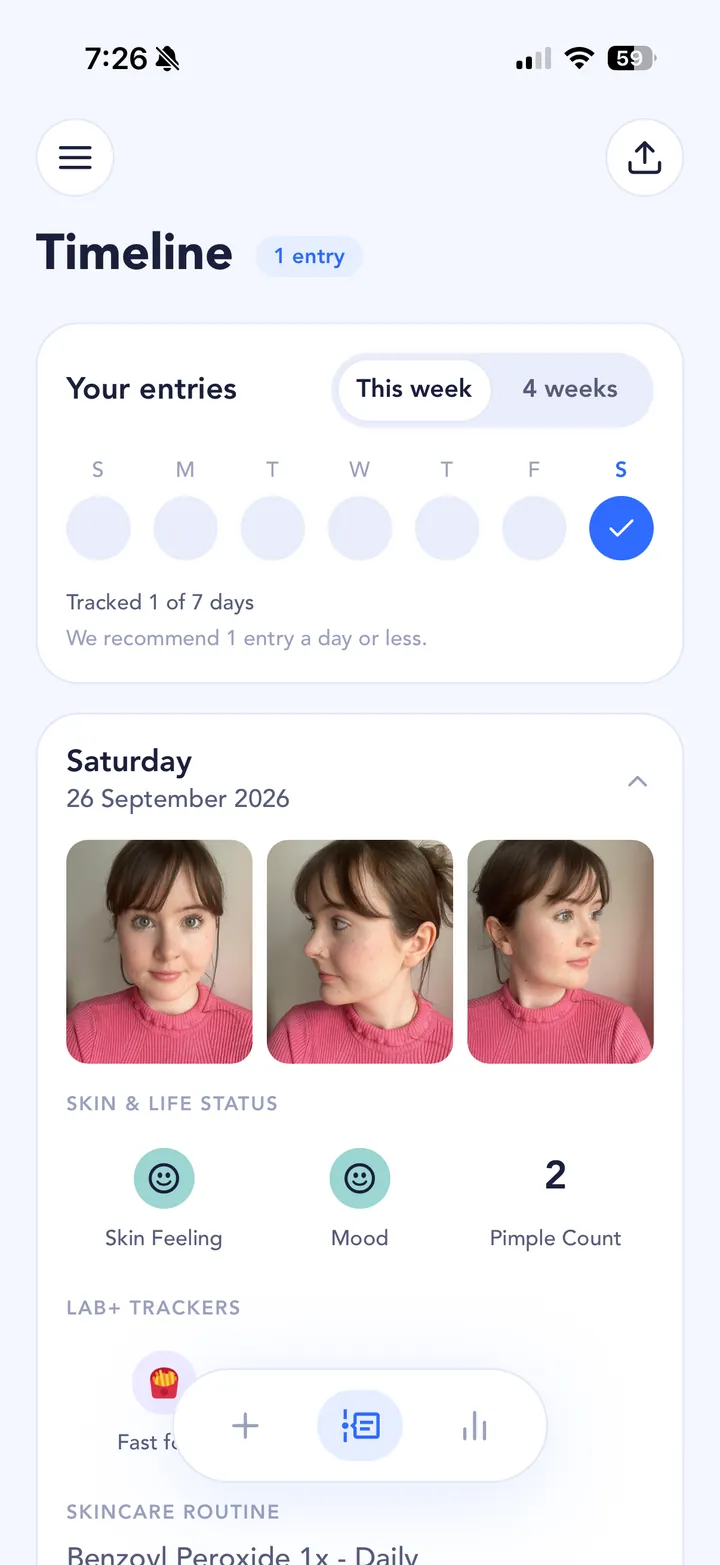
Bring your timeline to your GP or dermatologist. Rosacea flares come and go, and a few weeks of dated photos can show a doctor what your skin does when you’re not in the room. Your own data in SkinTheory is free forever.
Learn more
- Rosacea (NHS)
- Rosacea: Signs and symptoms (American Academy of Dermatology)
- Rosacea (British Association of Dermatologists)
- Rosacea: Symptoms, Causes, and Management (DermNet)
- Rosacea Triggers Survey (National Rosacea Society)
Questions people ask
Is it rosacea or acne?
Both can cause red bumps and pus-filled spots. Blackheads are a feature of acne, not rosacea, while rosacea usually brings flushing and lasting redness on the central face and tends to start in adulthood. Only a doctor or dermatologist can tell you which you have, and some people have both.
Can rosacea be cured?
No. The NHS and the British Association of Dermatologists both say rosacea can’t be cured, but treatment can control the symptoms. DermNet describes it as a long-term condition that comes and goes.
Can acne treatments make rosacea worse?
They can. The National Rosacea Society says the two conditions need different treatment and that acne medications may make rosacea symptoms worse. That’s one reason to get a diagnosis before treating red bumps on your face.
What are the most common rosacea triggers?
In a National Rosacea Society survey of 1,066 people with rosacea, the most reported triggers were sun exposure, emotional stress, hot weather, wind, heavy exercise and alcohol. Triggers differ a lot from person to person, so a diary or log of your own flares is the way to find yours.
Sources and further reading
- Rosacea, NHS
- Rosacea: Signs and symptoms, American Academy of Dermatology
- Rosacea: Symptoms, Causes, and Management, DermNet
- Rosacea, British Association of Dermatologists
- Rosacea Triggers Survey, National Rosacea Society
- How Are Acne and Papules and Pustules Different?, National Rosacea Society (Rosacea Review)
This guide is general information written by the SkinTheory team, not medical advice. SkinTheory isn’t a medical device. For diagnosis, prescriptions or side effects, talk to a dermatologist or doctor, and bring your SkinTheory log along.