
Hives (urticaria): what they are, how they differ from acne, and how to track them
Hives are itchy, raised welts that come and go within hours. Most clear up quickly, but swelling of the lips, tongue or throat is an emergency.
If you have hives and any of these, call 999 or 911 now
The NHS says to call 999 (911 in the US, or your local emergency number) if:
- your lips, mouth, throat or tongue suddenly become swollen
- you’re breathing very fast or struggling to breathe (you may be wheezing or feel like you’re choking)
- your throat feels tight or you’re struggling to swallow
- your skin, tongue or lips turn blue, grey or pale
- you suddenly become very confused, drowsy or dizzy
- someone faints and can’t be woken up
- a child is limp, floppy or not responding like they normally do
These can be signs of anaphylaxis, a serious allergic reaction. If you have an adrenaline auto-injector, the NHS says to use it and then call 999. Don’t wait to see if it settles, and don’t open an app to log it.
The short answer
Hives (urticaria) are raised welts or patches that appear suddenly, often itch intensely, and fade within hours. They’re very common: DermNet says one in five people has an episode at some point in their life. Most bouts are short-lived (acute) and clear up within days or weeks. If you keep getting hives for 6 weeks or longer, they’re called chronic hives. Chronic hives can last a long time: the Primary Care Dermatology Society says most people have them for one to four years. The big difference from acne is time: a hive is usually gone within a day, while a pimple sticks around.
What it looks like, and how it’s different from acne
Hives are raised bumps or patches, sometimes with redness around them, that can appear anywhere on your body and itch, sting or burn. The AAD says an individual hive tends to go away within 24 hours, but new hives can appear, and DermNet notes a welt may change shape while it’s there. Sometimes hives come with angioedema, a deeper swelling under the skin.
So the telltale differences from acne:
- Hives come and go within hours. Acne spots last days.
- Hives itch, often intensely.
- Hives can appear anywhere, and move around. Acne sits mostly on the face, chest and back, in the same places.
- No blackheads, whiteheads or pus. Hives are smooth, raised welts.
Other rashes can look similar. Only a doctor can diagnose what you have. The AAD says a dermatologist can often diagnose hives just by looking, which is a problem if they’ve faded by your appointment. That’s where photos help.
What sets it off
This depends a lot on whether your hives are acute or chronic.
Acute hives often do have a trigger. The NHS lists possible triggers including certain foods, contact with plants, animals, chemicals or latex, cold, heat or sweating, medicines, insect bites or stings, scratching or tight clothing, and infections. Water or sunlight can trigger hives too, but that’s rare.
Chronic hives usually don’t. The Primary Care Dermatology Society says about 95% of chronic urticaria is spontaneous, with no obvious trigger or cause, and that it isn’t an allergy. DermNet says it’s mainly of unknown cause, and probably autoimmune, meaning the immune system is involved. The AAD says many people never find out what’s causing their hives. The PCDS also says that, in general, allergy skin-prick or blood tests don’t help people with chronic spontaneous hives.
Even without a cause, some things can make chronic hives worse. The PCDS lists heat, stress, alcohol, and medicines such as aspirin and other anti-inflammatory painkillers. DermNet adds viral infections and tight clothing. See our guides on alcohol, stress and the gym and sweat for how to log those. Don’t stop a medicine you’ve been prescribed because of this page; talk to your doctor or pharmacist.
To be honest about the evidence: these pages list possible triggers without saying how strong the evidence is for each, and your own triggers may be different or may not exist at all.
How it’s treated
SkinTheory doesn’t recommend treatments and isn’t a medical device. A doctor or pharmacist decides what’s right for you. Here’s an overview of what exists:
- Antihistamines. The NHS says a pharmacist can advise you about antihistamines, and DermNet describes them as the first-line treatment.
- Anti-itch creams and short courses of steroids for some people.
- Specialist treatments for chronic hives that don’t respond, including biologic medicines and light therapy. The AAD’s diagnosis and treatment page lists these.
When to see a doctor
For emergencies, see the list at the top of this page. For everything else, the NHS says to ask for an urgent GP appointment or contact NHS 111 if:
- your symptoms haven’t improved after 2 days
- you’re worried about your child’s hives
- the rash is spreading
- your hives keep coming back
- you also have a high temperature and feel unwell
- you also have swelling under your skin
The AAD says that if hives last 6 weeks or longer, see a board-certified dermatologist.
How to track it in SkinTheory
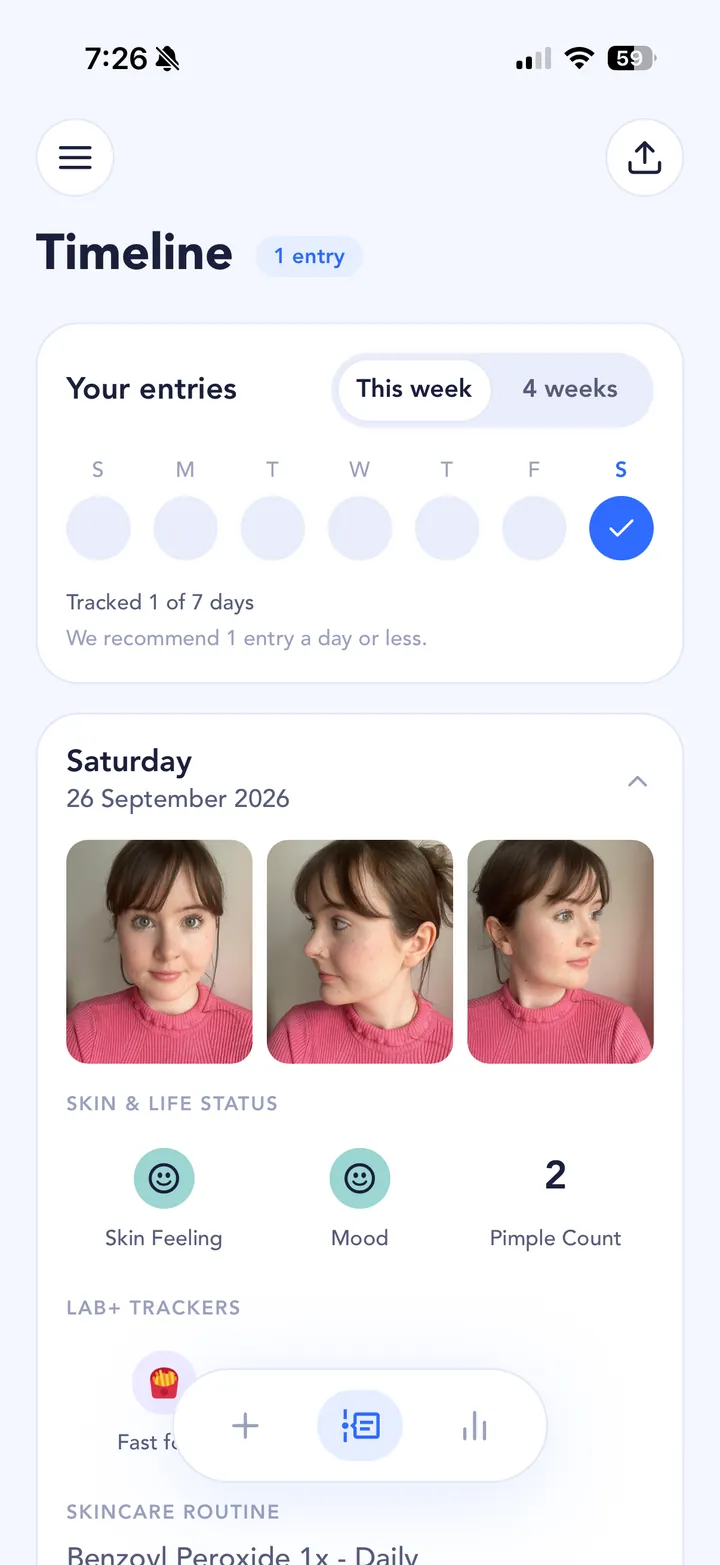
To be upfront: SkinTheory was built for acne. Pimple count doesn’t fit hives, and the graphs are built around pimple count, so for hives your photo timeline and entries are the main record. Here’s what’s useful:
- Photos while they’re there. Because each hive is usually gone within a day, it may have faded by the time you see a doctor. Take your entry’s three photos while the hives are visible. They’re saved in a private timeline that never goes to your camera roll.
- Skin feeling and mood in every entry. Mood is the closest thing to a stress log; there’s no separate stress tracker.
- Your skincare routine log, so you can see whether a new product lines up with a flare.
- A hypothesis tested over a set number of entries, for example “Do my hives flare on days I drink alcohol?” over 21 entries.
- Lab+ trackers such as Alcohol and Exercise (for heat and sweat). You can use any two Lab+ trackers free at a time, and all your own data is free forever.
- Routine reminders, so you log calm days too, not just bad ones.
The AAD suggests keeping a journal if hives last more than a few days or keep coming back: when they started, what you were doing, and what you ate, took or were ill with. SkinTheory has no food diary, medication tracker or notes for that, so keep those details somewhere else and bring both to your appointment.
Learn more
- Hives (NHS)
- Anaphylaxis (NHS)
- Hives: FAQs (American Academy of Dermatology)
- Urticaria – an overview (DermNet)
- Hives (urticaria) (American College of Allergy, Asthma and Immunology)
Questions people ask
Is it hives or acne?
Hives are itchy, raised welts that can appear anywhere on the body and change shape or move, with each one usually gone within 24 hours. Acne spots last days, sit mostly on the face, chest and back, and come with blackheads and whiteheads. If you’re not sure, a doctor can tell you.
How long do hives last?
The American Academy of Dermatology says a single hive tends to go away within 24 hours, though new ones can appear, and a bout usually lasts a few days to a few weeks. If you keep getting hives for 6 weeks or longer, that’s called chronic hives.
Are chronic hives caused by an allergy?
Usually not. The Primary Care Dermatology Society says about 95% of chronic urticaria is spontaneous, meaning there’s no obvious outside trigger, and that it isn’t an allergy. Things like heat, stress, alcohol and some painkillers can make it worse, though.
When are hives an emergency?
Call 999 (911 in the US, or your local emergency number) if your lips, mouth, throat or tongue suddenly swell, you’re struggling to breathe or swallow, your throat feels tight, or you feel faint, confused or very drowsy. These can be signs of anaphylaxis, a serious allergic reaction that needs treatment in hospital.
Sources and further reading
- Hives, NHS
- Hives: FAQs, American Academy of Dermatology
- Hives: Diagnosis and treatment, American Academy of Dermatology
- Hives: How to get relief at home, American Academy of Dermatology
- Urticaria – an overview, DermNet
- Urticaria: chronic spontaneous urticaria (chronic ordinary urticaria; chronic idiopathic urticaria), Primary Care Dermatology Society
This guide is general information written by the SkinTheory team, not medical advice. SkinTheory isn’t a medical device. For diagnosis, prescriptions or side effects, talk to a dermatologist or doctor, and bring your SkinTheory log along.